Can an 8-month-old baby soak in a bathtub? Safety first, then the tub
An 8-month-old boy soaking in a home bathtub — water temperature, depth, and slip resistance matter far more than the tub itself. This piece skips specs and focuses on how to judge whether your tub is safe for a small baby.
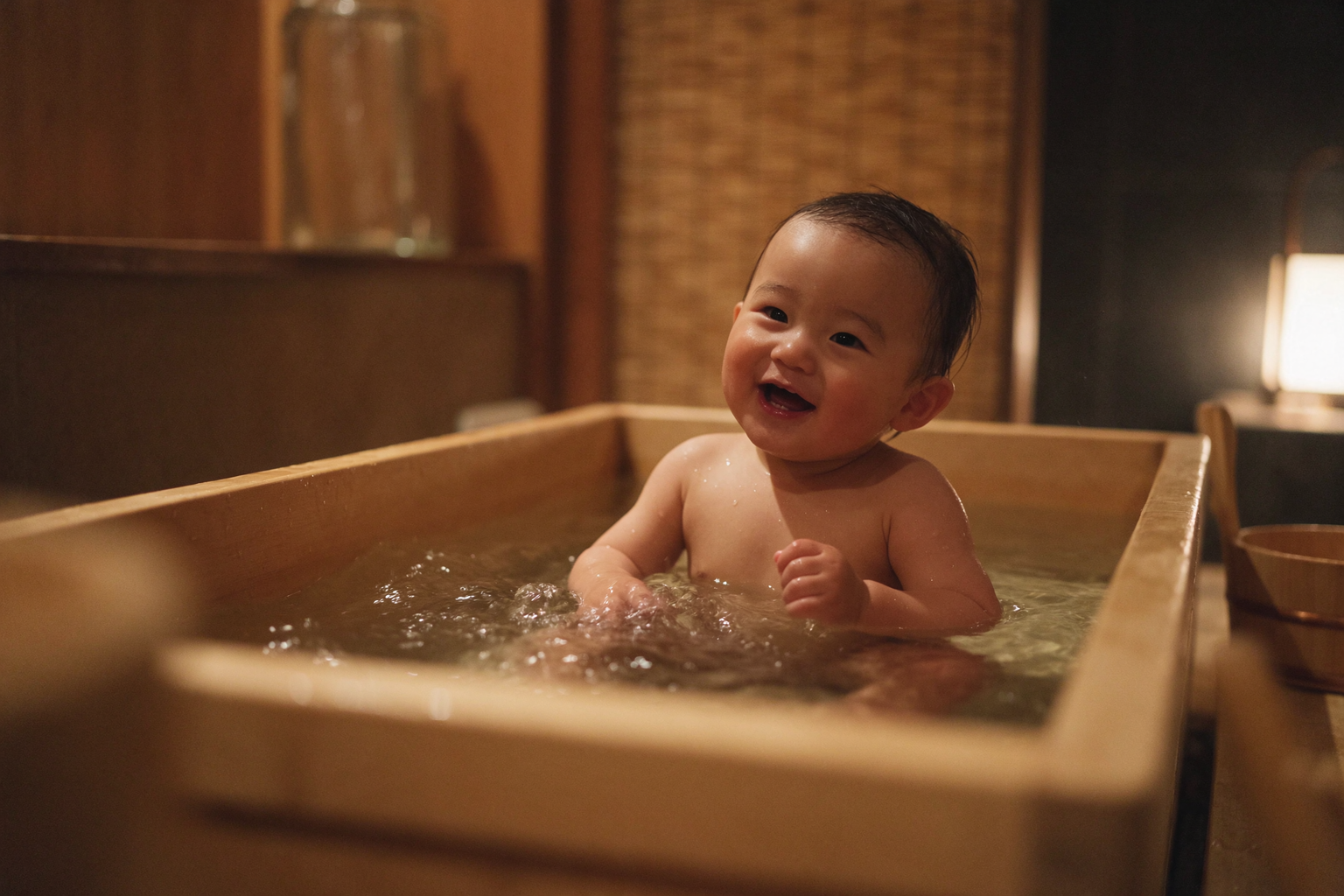
Can an 8-month-old baby soak in a regular bathtub? Yes. But "can" and "should" are different questions. You fill your big home tub halfway, lower the baby in — it sounds cozy, but the risk points are more than you think. It's not about age. It's about the tub.
The real issue isn't age — it's the tub's geometry
An 8-month-old boy can sit up steadily and is fascinated by water. Many parents think, "He can sit now, so the big tub is fine." The logic isn't wrong, but it skips a step: adult bathtubs are designed for adult bodies. The depth, the curve of the bottom, the faucet placement — all sized for grown-ups. When you put a baby in, the surface he's sitting on might be curved. His feet have no flat plane to brace against. One slip, one flail, and water goes up his nose.
So the first test is simple: when the baby sits in the tub, is the surface under him flat and stable? If the tub bottom has a pronounced curve, or the surface is so slick he keeps sliding, that tub isn't ready for him to sit in alone right now. A non-slip mat helps, but it doesn't fix the underlying curve.
Three things that actually matter
No matter what tub you use, infant bathing safety comes down to three things:
- Water temperature — Baby skin is thin. What feels "just right" to you may be too hot for him. The old elbow test works in a pinch, but a bath thermometer is more reliable. For the exact recommended temperature, follow your pediatrician's guidance — we won't print a number here because every child's situation differs.
- Water depth — When an 8-month-old is sitting, water up to chest level is plenty. No more. Deeper water means more buoyancy, which means less stability. You might think "more water = more comfortable soak," but for a baby, more water = more wobble.
- Slip resistance — Is the tub floor smooth? Can the baby grip the sides? Acrylic tubs tend to be slippery when wet. Solid-surface tubs feel different but still need wet-friction consideration. Regardless of material, wet is always slicker than dry. A non-slip mat is the simplest fix — just make sure the mat itself grips the tub floor and doesn't drift along with the baby.
These three points have nothing to do with brand or tub type. Any tub that fails on these three isn't safe for a baby, period.
Adult tub vs. baby basin — each has its lane
At this point you might wonder: should I just buy a baby bath basin? Depends.
If your bathroom has room for a dedicated infant basin, great. It's shallow, flat-bottomed, and sized to cradle a small body — inherently safer than an adult tub. The downside: it gets outgrown around age one, and it takes up storage space.
If you'd rather not add another item and want to use your existing adult tub, that works too — provided you solve the three problems above. In practice, many parents place an infant bath seat or non-slip cushion inside the tub, keep the water very shallow, and never take their hands off the child. That's not "making do." It's a legitimate approach.
There's another scenario: you're renovating, haven't bought a tub yet, and have a baby or plan to. This is the moment to ask extra questions — is the tub floor relatively flat? Are there grip-friendly surfaces on the inner walls? How does the material perform for wet slip resistance? You can ask the factory directly. GLOAMSOAK's acrylic and solid-surface bathtubs support custom configurations — the same mold can be adjusted for color, function, and detail. If you care about bottom curvature or surface treatment, these requests are easier to fulfill in project-scale orders; single-piece home orders have higher mold-change costs, but it's not off the table. Specifics subject to final factory documentation.
When choosing a tub, look past aesthetics
Homeowners picking a bathtub often get swept up by looks. Freestanding, skirted, matte white, egg-shaped — all beautiful, but a beautiful tub isn't automatically functional for every member of the household. If you have elderly family members, small children, or anyone with limited mobility, your priority list should shift.
GLOAMSOAK's smart bathtubs offer phone-controlled operation, remote filling, and temperature massage. For adults, these are comfort upgrades. For a baby scenario, what matters isn't how many massage modes there are — it's whether you can lock the temperature during the fill phase so the child can't accidentally scald themselves on a faucet. Remote filling means you can prepare the water, set the temperature, and control the level before the baby even enters the bathroom. That logic is genuinely practical for families with young kids.
That said, smart features solve the "preparation" stage. Once the baby is in the water, no feature replaces your hands and eyes. Constant supervision, not a single second away. That's not a disclaimer — it's physics. An 8-month-old loses balance in water in one second.
A test you can do right now
Go to your bathroom today. Put a shallow layer of water in the tub. Place whatever non-slip mat or bath seat you plan to use for the baby. Then press your palm down on it — simulate roughly 10 kg of weight — and push forward, backward, side to side. Does the mat shift? Does the tub floor cause the mat to lift at the edges? If your hand can't stay stable, the baby will be even less stable.
This test costs nothing, needs no tools, and takes three minutes. If the result is "stable," you can keep using this tub for baby baths — just mind the temperature and depth. If the result is "not stable," either change the mat or switch to a baby basin. Don't compromise.
Soaking can be your time. But safety isn't a gamble — especially not for the little person who can't yet say "I slipped."
Send the room count, sizes and timing. We quote after the layout, not before.
Get in touch